

 UK - English (£)

Thousands of our tags are used in Dementia care homes across the UK, helping lost belongings back to their owners, so we decided to put together this informative article for our customers at Attach A Tag. There are many different forms of dementia, all of which are progressive conditions that cause damage to the brain; And with Dementia unfortunately being the leading cause of death in the UK in recent years, there's no better time than to discuss this umbrella disease.
Types of Dementia
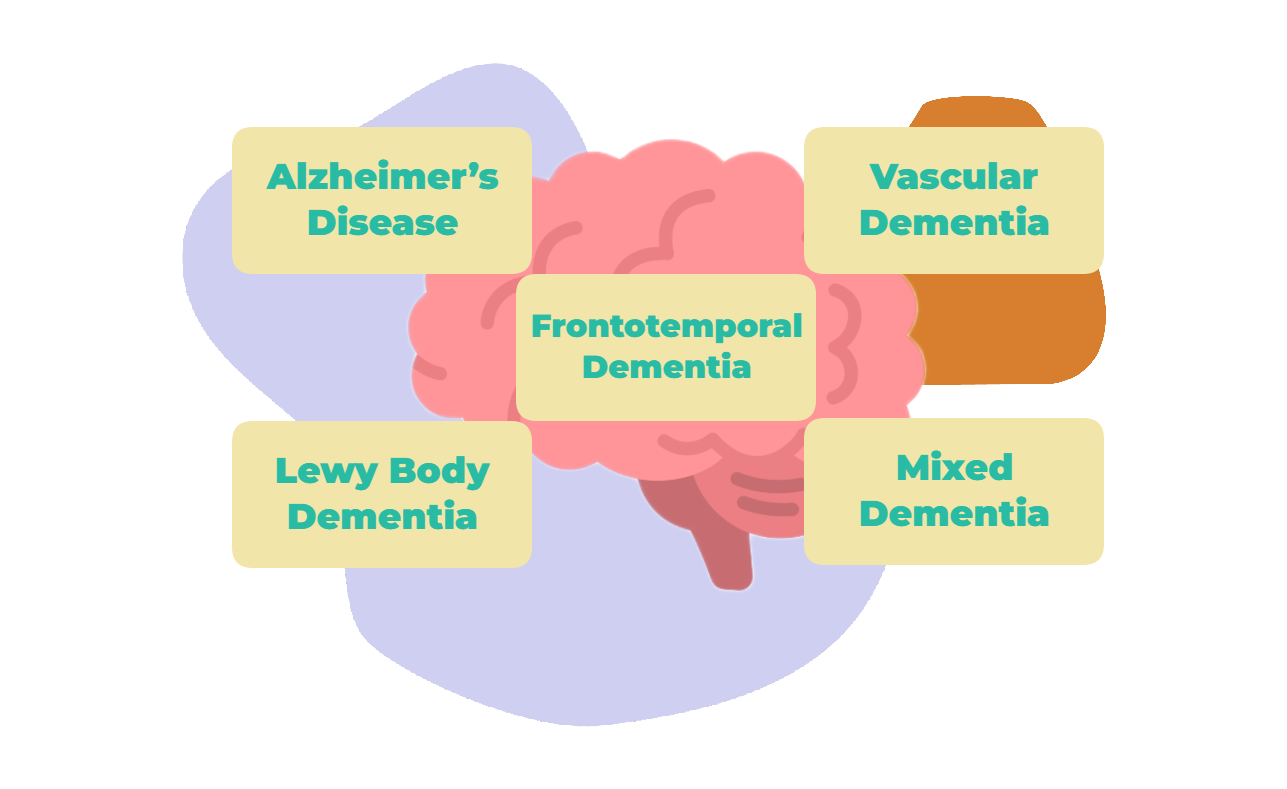
Alzheimer's Disease
Alzheimer’s disease is a type of dementia that mostly affects older adults, but it can also develop in younger people under the age of 65, when it is known as ‘young onset Alzheimer’s disease’. It causes problems with memory, thinking and behaviour. As a progressive condition, it will affect more and more aspects of a person’s life over time
Unlike other types of dementia, Alzheimer’s disease is thought to be caused by the abnormal build-up of two proteins in the brain, ‘amyloid’ and ‘tau’. These form structures called ‘plaques’ and ‘tangles’, which damage the brain cells. Alzheimer’s disease also reduces the levels of chemical messengers in the brain (‘neurotransmitters’) which makes it harder for messages to pass between brain cells.
As Alzheimer’s disease progresses, brain cells continue to die and parts of the brain shrink, and the levels of neurotransmitters decrease further.
Different forms of dementia have different symptoms, but in Alzheimer’s disease, the most common early sign is difficulty with memory.
Vascular Dementia
Vascular dementia is the second most common type of dementia after Alzheimer’s disease.
Vascular dementia is a form of dementia that occurs when the brain does not receive enough blood supply, meaning it cannot carry out its normal functions.
It is caused by damage or disease to the blood vessels in the brain, often as the result of a stroke or transient ischaemic attack(s) (TIAs), also known as ‘mini strokes’.
Vascular dementia can also result from other conditions that affect the supply of blood to the brain, such as high blood pressure, heart disease and diabetes.
How does vascular dementia differ from other types of dementia?
The main difference between vascular dementia and other types is that vascular dementia is caused by the brain not getting enough blood, whereas other common forms (eg Alzheimer’s disease, frontotemporal dementia and Lewy body dementia) are caused by abnormal proteins building up in the brain.
The early symptoms of vascular dementia also differ from some other types – for example, changes in mood, behaviour and personality are initially more common than memory problems.
Lewy Body Dementia
Lewy bodies are tiny clumps of a protein called alpha-synuclein that can develop inside brain cells.
These clumps damage the way the cells work and communicate with each other, and the brain cells eventually die.
Dementia with Lewy bodies is closely related to Parkinson's disease and often has some of the same symptoms, including difficulty with movement and a higher risk of falls.
Dementia with Lewy bodies accounts for 10-15% of diagnoses of dementia, although some studies suggest it may be up to 20%. Around 10% of people with young onset dementia (where symptoms develop before the age of 65) have Lewy body dementia.
Frontotemporal Dementia
Frontotemporal dementia (FTD) is an umbrella term for a group of dementias that mainly affect the frontal and temporal lobes of the brain, which are responsible for personality, behaviour, language and speech. Unlike other types of dementia, memory loss and concentration problems are less common in the early stages.
Frontotemporal dementia is a rare form of dementia affecting around one in 20 people with a dementia diagnosis. It usually develops between the ages of 45 and 65, whereas many other types are more common after the age of 65. In addition, frontotemporal dementia usually develops slowly, meaning that symptoms tend to increase over a longer period of time.
Frontotemporal dementia often has a genetic link, meaning those who develop it also have relatives impacted by it.
It may be possible, if there is a family history, to have a genetic test to see if you’re at risk; you can talk to your GP about being referred to a geneticist.
Mixed Dementia
Mixed dementia is a condition where two or more types of dementia occur together, which often makes it challenging to diagnose and manage. A person with mixed dementia will experience a combination of the symptoms associated with the types of dementia they have.
Mixed dementia can involve any type of dementia. However, the most common forms are Alzheimer’s disease with vascular dementia and Alzheimer’s disease with Lewy body dementia. The person will have symptoms of both forms. It's most common in people over 75 and accounts for at least 10% of all dementia diagnoses.
Symptoms and Stages of Dementia
There are 3 main stages of all types of Dementia - Early, Middle and Late - each coming with their own set of struggles for the person affected and those caring for them.
Each stage can last around 2-4 years however late stage dementia may be on the shorter side due to extensive decline in bodily and mental function.
In the Early Stage
In the early stages of dementia, a person will start to experience problems that affect their everyday life. They may notice these changes themselves, or they may first be recognised by their family, friends or colleagues. While some people may not think it is necessary to speak to their doctor at this stage, Dementia UK notes that it is important to see a GP to rule out other conditions or start the process of getting a diagnosis so the right support can be put in place early on.
Symptoms may include: mild problems with their concentration and short-term memory, language and communication (mainly affecting word-finding or following and responding to conversations), Getting lost and misplacing things, irritability and a change in behaviour.
Furthermore, there may be coinsiding symptoms with specific types of Dementia that can affect their physical condition such as muscular weakness or paralysis with those affected by Vascular Dementia.
Middle Stage
While dementia progresses differently for everyone, in the middle stages, the mild problems that the person first experienced become more pronounced and start to affect their ability to live without some form of support.
Some of these issues may be: Sleep difficulties, restlessness, disinhibited behaviour in speech or actions, not recognising that they are at home or often not wanting to lose sight of a loved one, problems with balance and repetitive behaviours such as rubbing at clothing or repeating questions and phrases.
During this time, another prominent symptom may occur called "Sundowning". Sundowning is a term that refers to a state of intense anxiety that typically occurs around sunset.
The person with dementia will often have a strong sense that they are in the wrong place – for example, they may insist that they need to go home, even if they are already at home, or that they are late for work, even if they are retired.
They might also be disorientated in time – for example, they may believe that their adult children are still young and need to be collected from school.
Late Stage Dementia
This can be the most difficult stage of dementia for the person’s partner, family and friends. In the late stage of dementia, the changes in the person with the diagnosis become more pronounced to the point that they are unable to live independently.
Seeing the changes in the person can be very upsetting, and making decisions about long-term care may cause feelings of loss and guilt, particularly if they previously made promises to their loved one about how they would be cared for in late stage dementia.
Here, the person's ability to communicate is significantly reduced - with only a few words being able to be spoken at a time, and often a lack of understanding what people say to them.
A big thank you to Dementia UK , Alzheimer's Society UK & the NHS Dementia page for the information above.
If you or someone you know has been diagnosed with a varient of Dementia and need support - there are two helplines to call within the UK:
Dementia UK's Admiral Dementia Nurse helpline: 0800 888 6678 (free)
Alzheimer's Society helpline: 0333 150 3456 (standard local rate)
In case of an emergency related to dementia, please call 999 or 111.